Choosing flight sim yokes & throttles means balancing platform fit, control layout, and price rather than assuming one cockpit control will suit every pilot. The Logitech G Pro Flight package combines a yoke with rudder pedals, while the Turtle Beach VelocityOne covers PC and Xbox platforms and pairs a yoke with a throttle. The right choice comes down to whether a focused PC setup or broader platform reach matters more.
Quick verdict
The Logitech is the more focused pick for PC flying with rudder-pedal control. The Turtle Beach is the broader choice for shoppers who want Xbox support alongside PC compatibility, plus a yoke-and-throttle layout and Flight Management Display. A $140 gap separates the two prices, so the Turtle Beach earns consideration when its extra platform support and controls match your plans.
At a glance
| Product | Price | Platform fit | Main control layout | Connectivity |
|---|---|---|---|---|
| Logitech G Pro Flight Yoke System + Pro Flight Rudder Pedal System | $200 | PC | Yoke and rudder pedal system | Wired USB |
| Turtle Beach VelocityOne Flight Yoke \& Throttle for Xbox Series X|S/Xbox One/PC | $340 | PC, Xbox One, Xbox Series S, Xbox Series X | Yoke and throttle with Flight Management Display | Wired USB, USB-C |
Where each wins
- Logitech wins for a defined PC cockpit bundle. The yoke-and-rudder-pedal pairing is the central reason to choose it, and the $140 lower price gives the package a clear place in a simpler setup.
- Turtle Beach wins for platform reach. PC, Xbox One, Xbox Series S, and Xbox Series X compatibility make it the natural match for shoppers who move between computer and console flying.
- For a throttle-centered setup, Turtle Beach has the clearer fit. Its product name explicitly includes a throttle, while the Logitech package is named around a yoke and rudder pedals.
Product notes
Logitech G Pro Flight Yoke System + Pro Flight Rudder Pedal System
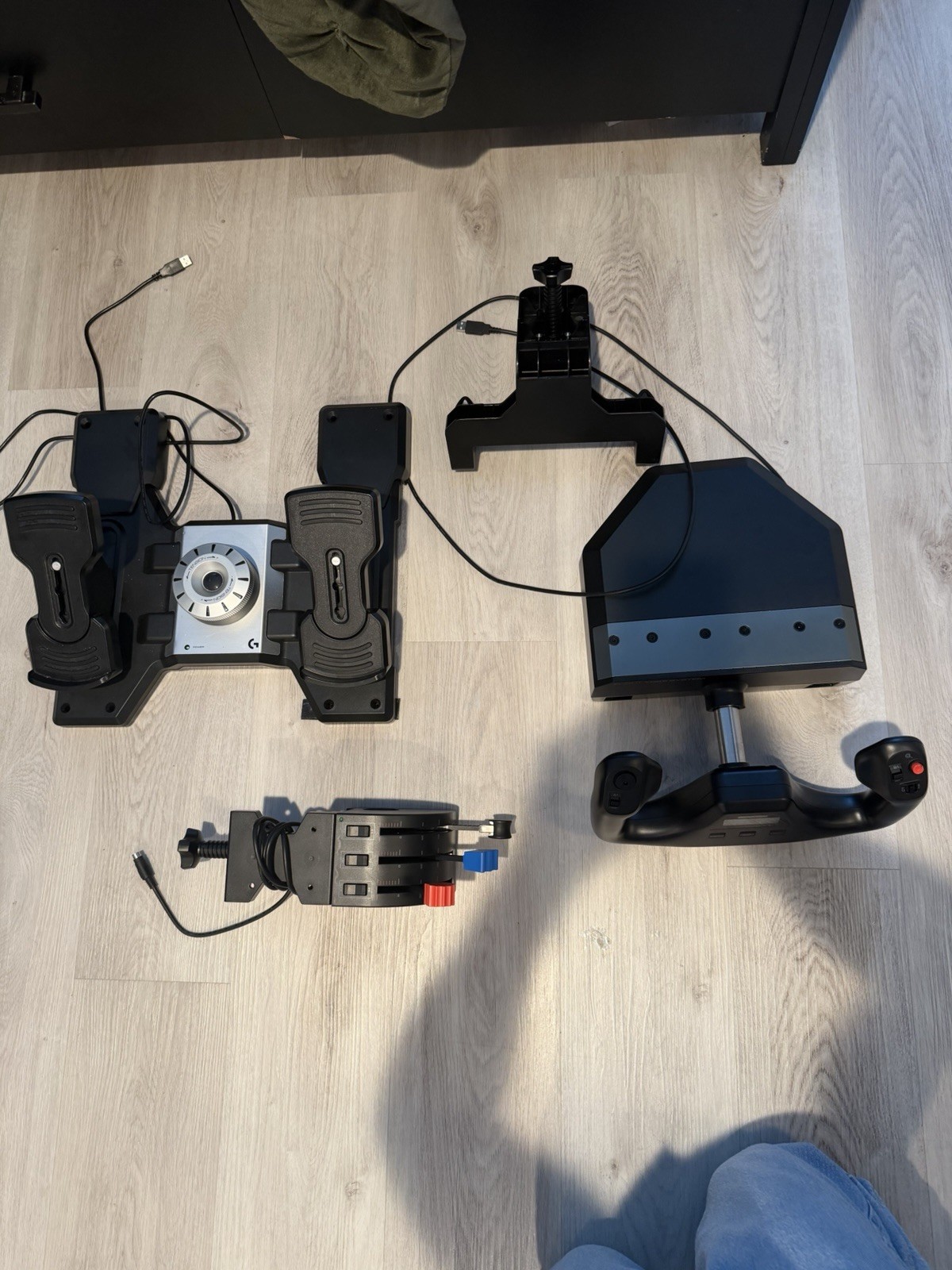
The Logitech package is easiest to justify for a PC cockpit that specifically needs both a yoke and rudder-pedal control in one named package. That combination is its clearest reason to choose: the product pairs those controls, while the 4-foot cable and wired USB connection suit a computer setup. The limitation is platform scope. Compatibility is listed for PC, and the description explicitly says it was not compatible with Xbox, so it is a poor fit for a console-centered setup. It is also open-box, a detail worth weighing before purchase. Choose the Logitech when the PC boundary is acceptable and rudder pedals matter more than a throttle or display.
Turtle Beach VelocityOne Flight Yoke \& Throttle for Xbox Series X|S/Xbox One/PC
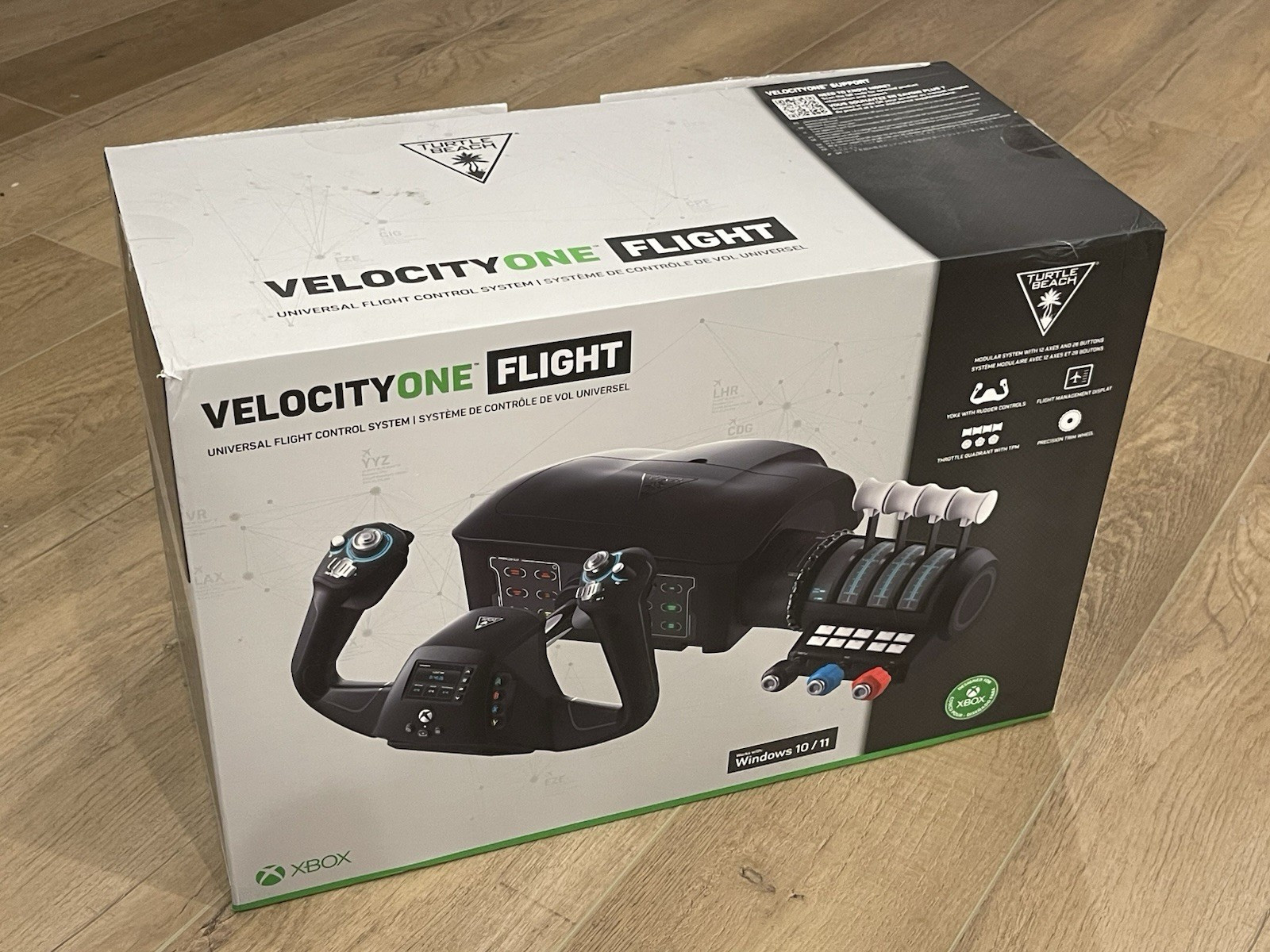
Turtle Beach makes the stronger case for mixed PC-and-Xbox households. Its compatible models include PC, Xbox One, Xbox Series S, and Xbox Series X, and the package explicitly pairs a yoke with a throttle. The Flight Management Display is another named feature, giving shoppers a reason to choose it beyond platform reach. Wired USB and USB-C connectivity are listed, while the black hardware is open box. The limitation is that open-box condition may not suit shoppers who specifically want a sealed retail presentation. It is the better match for someone who wants the Turtle Beach package to cover Xbox and PC rather than a PC-focused cockpit.
Final choice by use case
- For PC flying with rudder pedals: Choose the Logitech. Its named yoke-and-rudder package and PC compatibility align directly with that use case.
- For Xbox One or Xbox Series flying: Choose the Turtle Beach, whose compatibility explicitly includes those console models as well as PC.
- For PC flying that specifically calls for a throttle: Choose the Turtle Beach because the throttle is part of its named control layout.
- For keeping the spend lower: Choose the Logitech at $200. The Turtle Beach is $340, so its broader platform support, throttle, and Flight Management Display should be meaningful to your setup before paying the difference.
In short, Logitech is the straightforward PC-and-pedals decision; Turtle Beach is the more expansive PC-and-Xbox choice with a throttle-focused layout.