Shopping for console handheld hardware often comes down to one tension: do you prioritize the headline game-count claim, or the listed price and the way each console handles connectivity and navigation? These two retro TV-console options invite a direct comparison, yet their named details point to different priorities.
Quick verdict
Pick the Video Game Console Retro TV Stick if a larger headline game count and an audio-focused feature matter more than keeping the listed outlay down. Pick the Retro Game Console if the lower listed price and a more expansive set of named connectivity and interface tools matter more. The $18.30 listed-price spread is meaningful, while 4K HDMI and two wireless controllers appear in both titles, so those shared basics should not decide the matchup.
At-a-glance comparison
| Product | Listed price | Headline title emphasis | Selected named detail |
|---|---|---|---|
| Video Game Console Retro TV Stick | $46.99 | 58000+ games; TV Stick | Quad-core S905L CPU; ARM Mali-450 GPU |
| Retro Game Console 4K HDMI | $28.69 | 41000+ games; 4K HDMI output | Bluetooth BT5.2; Wi-Fi; HDR; voice control |
Where each product wins
- For headline-count and audio emphasis: Video Game Console Retro TV Stick. Its title carries the larger game-count figure, and its attributes specifically name 3D Audio Technology. That is the cleaner fit when those two signals matter more than the price position.
- For named connectivity and interface controls: Retro Game Console. Its attributes name Bluetooth BT5.2, Wi-Fi, HDR, and voice control. It also names search, collection, and game-progress saving, giving this side more explicit navigation tools.
Product notes
Video Game Console Retro TV Stick
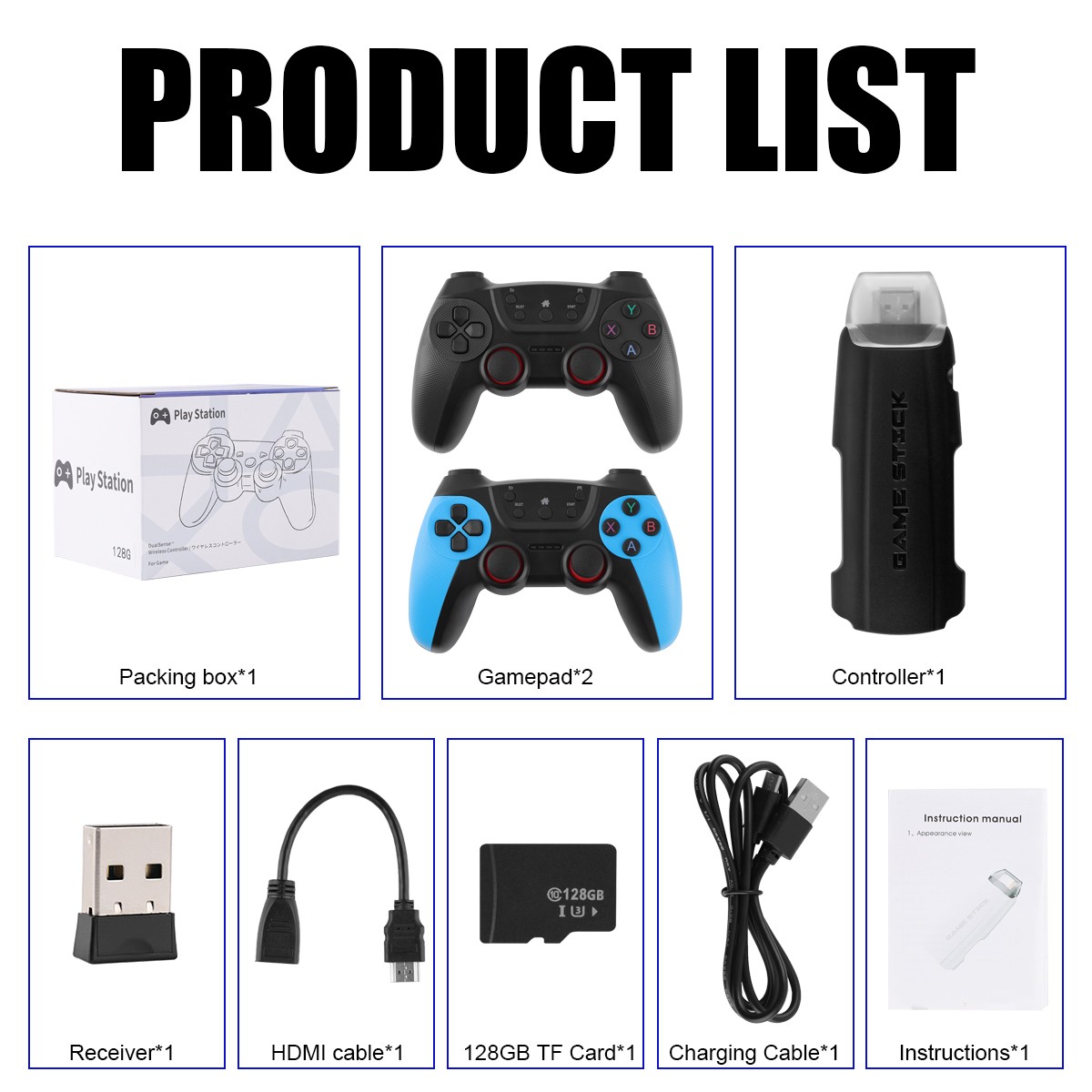
The most concrete reason to choose this entry is its explicit hardware detail: a Quad-core S905L CPU and ARM Mali-450 GPU. The TV Stick wording also makes its format part of the decision rather than leaving that choice implicit. That may appeal to shoppers who want named components alongside a console-style retro game package. The limitation is its price position: it is the higher-priced entry in this comparison, so the shopper has to care about those specific hardware details to accept the larger outlay. HDMI and two wireless controllers are shared title points, not unique reasons to select it. In short, this is the side for hardware-detail and audio-interest priorities, not a default pick for every use case.
Retro Game Console 4K HDMI
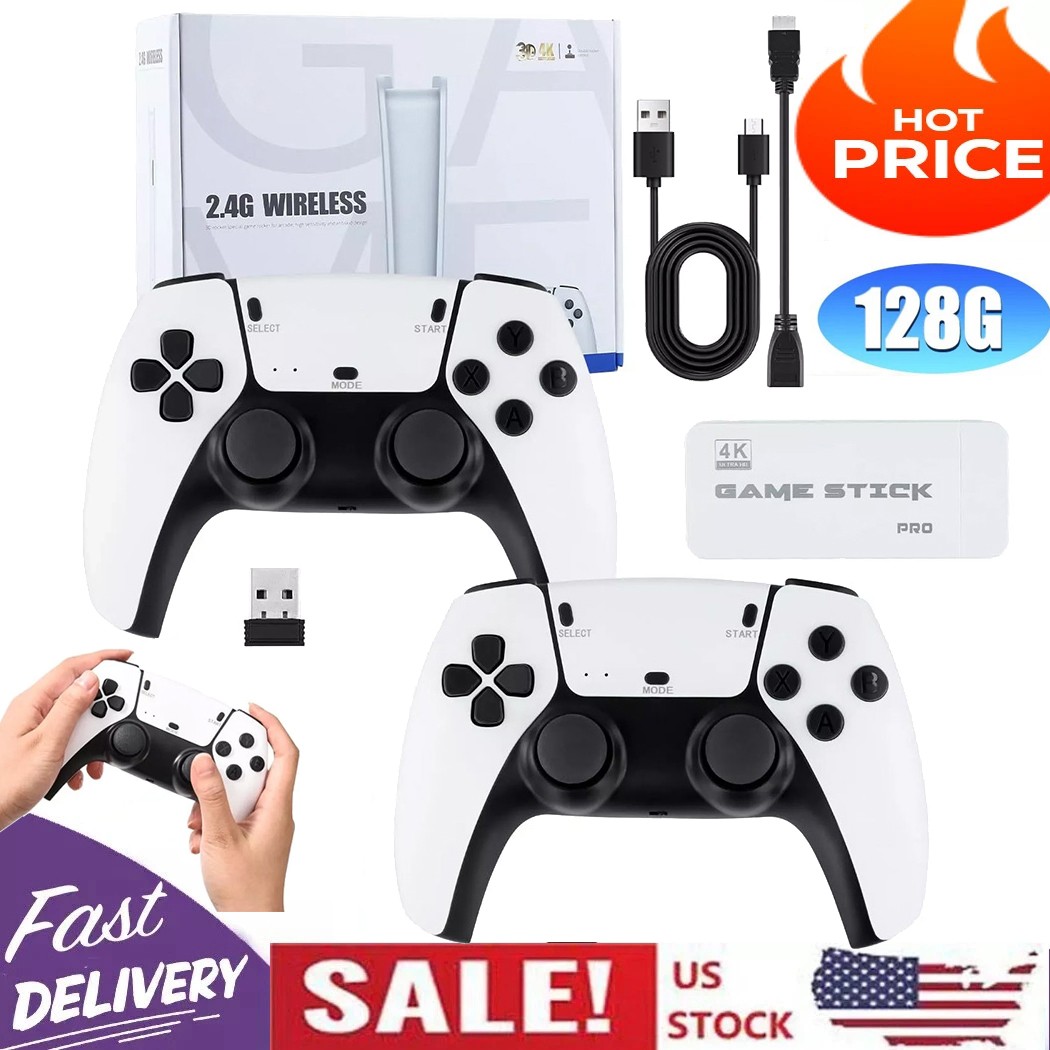
The strongest reason to choose Retro Game Console is its named navigation set: search, collection, and game-progress saving. It also lists a 10/100M standard RJ-45 connection, giving connectivity-focused shoppers another concrete attribute to weigh. The limitation is the headline library total: it includes duplicate game titles across regional versions, languages, and release variants, so the number represents a mixed list of entries rather than the same number of wholly distinct games. That caveat matters if library breadth is the main deciding criterion. Otherwise, the console's lower listed price and detailed control-oriented features make its use case straightforward: prioritize the tools you will actually use, not the headline count alone.
Final choice by use case
- Headline-count and audio use case: Choose Video Game Console Retro TV Stick when the TV Stick title and 3D Audio Technology align with your priorities, and its higher listed price is acceptable.
- Price and tools use case: Choose Retro Game Console when the $28.69 listed price and named connectivity and navigation functions matter more. Its duplicate-entry caveat also makes it the clearer pick for shoppers who want to judge the package by tools rather than count alone.